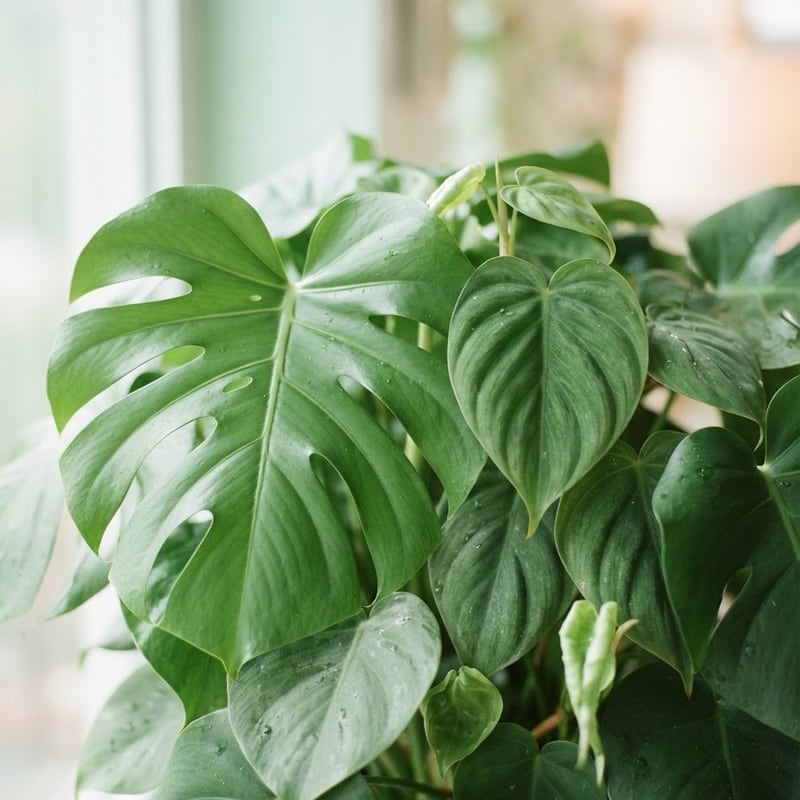
A monstera is not a typical houseplant when it comes to roots. In the wild it climbs trees in tropical forests, and its roots spend their time in loose bark, leaf litter and air. Put those same roots in dense, wet potting soil and they struggle.
Why monstera needs a different soil
Monstera belongs to the aroid family, along with philodendron, pothos and anthurium. Aroids like to be watered well, then drain quickly and get air around the roots. Most bagged “all purpose” or “indoor” soil from a big-box store is mostly fine peat or composted material. It stays wet for a long time, especially in a Canadian winter when the heat is low and the light is weak.
Wet, airless soil is how roots rot. Rot is the most common reason a monstera drops yellow leaves.
What to look for in the mix
A good monstera mix feels more like a handful of chunky bark than a handful of dirt. Look for these things:
- Bark pieces. Fir bark or similar chunks create air pockets that do not collapse.
- Perlite. Light white pebbles that keep the mix open.
- Something that holds a little water. Coco chips, coco coir or a small amount of peat keep the mix from drying out too fast.
- Horticultural charcoal. A small amount helps keep the mix from going sour between waterings.
A simple test: squeeze a damp handful. It should crumble apart. If it forms a tight, muddy ball, it is too dense for a monstera.
Signs your monstera is in the wrong soil
- Soil is still wet five to seven days after watering.
- Lower leaves turn yellow, then go soft.
- The base of the stem feels mushy or smells sour.
- Fungus gnats keep coming back.
- New leaves are small and the plant looks stalled.
If you see these, check the roots. Healthy monstera roots are firm and pale to tan. Mushy brown or black roots are rotting and should be cut off with clean scissors before repotting.
Making your own monstera mix
You can mix your own, and many experienced growers do. A common recipe is roughly equal parts bark, perlite and potting soil or coco, with a handful of charcoal. The catch is quantity. Components are sold in large bags, often 30 to 50 litres each, so mixing for one or two pots means buying several big bags and finding somewhere to store them. If you have many plants, bulk components make sense. If you have one monstera and a small apartment, they probably do not.
How to repot a monstera
Repot in spring or early summer, when the plant is actively growing.
- Pick a pot 2 to 5 cm wider than the current one. Going much bigger keeps too much wet mix around the roots. It must have drainage holes.
- Water the plant a day before. Slightly damp roots are easier to handle.
- Slide the plant out and gently shake off the old soil. Loosen any roots that are circling.
- Trim any mushy, brown or black roots with clean scissors.
- Add a few centimetres of fresh mix to the new pot, set the plant so the base of the stem sits about 2 cm below the rim, then fill around the roots.
- Press the mix lightly, not hard. Water until it runs out of the bottom.
- Put the plant back in bright, indirect light and skip fertilizer for a few weeks.
Not sure how much mix you need? Each mix page has a “How much do I need?” calculator. Enter your pot diameter and it gives you litres and bags.
Watering after you repot
A chunky mix dries faster than dense soil, so you will water a little more often than you did before. Check by pushing a finger about 5 cm into the mix. If it feels dry, water thoroughly. If it still feels damp, wait. Empty the saucer so the pot is not sitting in water.
Because the mix has no fertilizer in it, you will need to fertilize regularly in the growing season. Use a balanced houseplant fertilizer at the strength on the label, and ease off in fall and winter.
Pot choice and light
The pot matters almost as much as the mix. Plastic pots hold moisture longer, so they suit a very airy mix and a plant in a bright, warm spot. Terracotta dries faster and is more forgiving if you tend to water often. Either works, as long as there are drainage holes. A decorative pot without holes is fine as an outer sleeve, but lift the plant out to water and let it drain.
Monstera grows best in bright, indirect light. In a dim room the mix stays wet longer, so water less often and check deeper in the pot before you do.
Common mistakes with monstera soil
Adding a layer of gravel at the bottom of the pot does not improve drainage. It only raises the wet zone closer to the roots. Fill the pot with the same mix from top to bottom.
Repotting into a pot that is far too big is the other common mistake. A small plant in a large pot sits in a lot of mix it cannot use, and that mix stays wet. Move up one size at a time.
Finally, do not pack the mix down. Roots need air pockets. Tap the pot on the counter and press lightly with your fingers, nothing more.
Where to find a ready-made blend
If you would rather skip the buckets and the big bags, our Aroid Mix is hand-mixed for monstera, philodendron, pothos, alocasia, anthurium and syngonium. It is 40% fir bark, 25% coco chips, 20% perlite, 10% horticultural charcoal and 5% sphagnum peat moss, sold in a light 3-litre bag, and shipped across Canada by Canada Post (not to Quebec yet). Details on rates are on the shipping page.
For other plants in your home, see our guide to the best soil for indoor plants.