To get a Christmas cactus to bloom, give it 12 to 14 hours of darkness each night and cooler temperatures (around 10 to 15°C) for about four to six weeks in fall, with a little less water. Once buds show, stop changing anything.
The plant sets flower buds in response to day length and temperature, so most failures to bloom trace back to a warm room or a lamp left on in the evening.
When to start
For flowers around December, begin in late September or early October. In most of Canada the days are already getting shorter by then, which helps.
A plant that blooms in November might be a Thanksgiving cactus (Schlumbergera truncata), which flowers earlier. Our Christmas cactus care post explains how to tell them apart.
What triggers buds
Three things trigger buds, and they work best together:
- Long nights: at least 12 hours of darkness, every night, for several weeks.
- Cool temperatures: about 10 to 15°C at night works well. Nights above about 21°C can stop buds from forming.
- Slightly less water: a drier stretch in early fall marks the end of the growing season.
Any one of these can start buds in some plants, but combining them gives the most reliable result.
Step by step
1. Pick a cool, dim spot
A spare room, an unheated porch that stays above about 7°C, or a bright, cool windowsill all work. Avoid rooms where lights come on in the evening. Even a lamp or a streetlight through the window interrupts the dark period.
2. Give long nights
If the plant sits in a living room, cover it with a cardboard box or a dark cloth from early evening until morning. Uncover it each morning so it gets bright, indirect light during the day. A closet works too, as long as the plant comes out into the light each day.
3. Cut back on water
Let the top few centimetres of soil dry out before watering, and water a little less often than in summer. The soil shouldn’t stay bone dry for long, though. Wrinkled leaves mean it’s too dry.
4. Skip fertilizer
Stop feeding in late summer. Fertilizer in fall tends to push leaf growth over flowers. Our mixes contain no fertilizer, so you control this directly.
5. Watch for buds
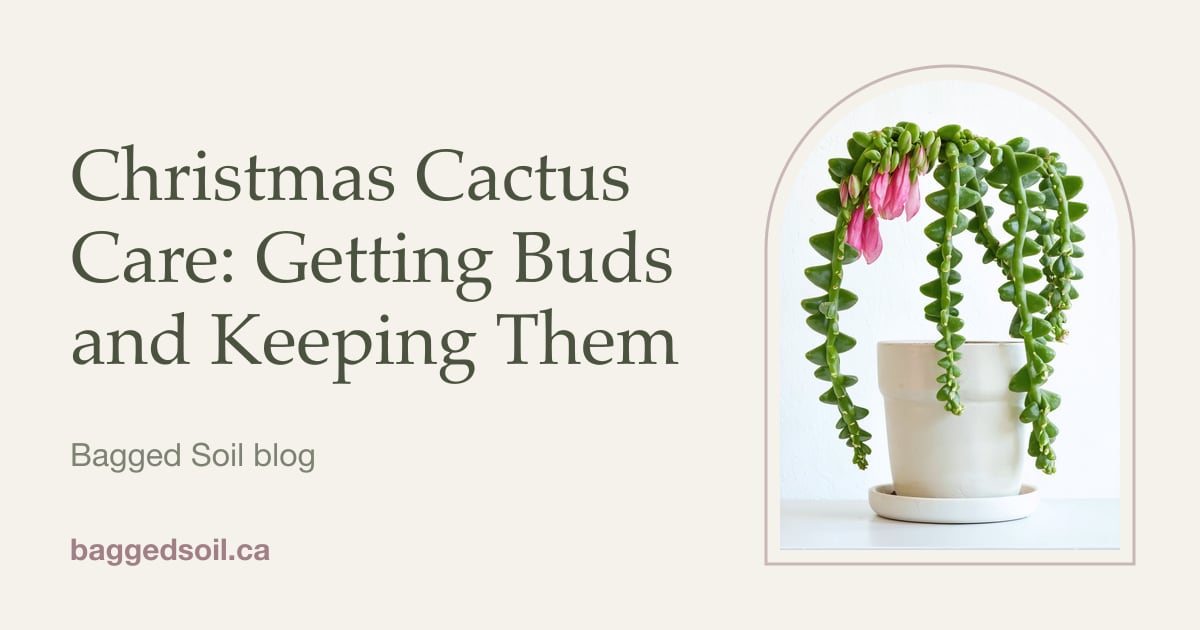
After four to six weeks, small pink or reddish bumps appear at the tips of the stem segments. Once you see them, you’re nearly there.
6. Hold everything steady
When buds form, return the plant to a consistently bright, indirect spot and resume normal watering. Don’t move it, turn it, or put it near a heater or a draft, because sudden changes are the main reason buds drop.
Keep the soil lightly moist, neither wet nor dry.
While it blooms
Flowers last a few weeks. Keep the plant in bright, indirect light at normal room temperature, since cooler rooms make flowers last longer.
After it finishes, the plant rests. Water less for a few weeks, then go back to normal care in spring. Spring is also a good time to repot and to take cuttings. See propagate Christmas cactus.
Why it might not bloom
- Too much warmth. Rooms that stay at 21°C or more at night can prevent budding.
- Evening light. A TV, lamp or porch light on at night breaks the dark cycle.
- Too much nitrogen. A lawn-style or high-nitrogen feed grows leaves and can delay flowers.
- Age. Plants usually need a few years of growth before they bloom well.
- Weak daytime light. A dark corner all year gives few flowers.
- Overwatering. Soft stems and wet soil from poor drainage stress the plant. See root rot and Christmas cactus leaves problems.
Soil and pot
In the wild, Christmas cactus grows in trees, so it prefers a loose, airy mix with decent drainage. Heavy soil that stays wet is a common problem. Our Succulent & Cactus Mix is a good fit, and there’s a full guide to Christmas cactus soil. Regular potting soil works if you mix in perlite or bark so water drains well.
It likes to be a little crowded in its pot. Repot only every two to three years, in spring, with a pot one size up.
If the buds drop anyway
Buds fall when the plant gets a shock, and the shock can be small: a move from one windowsill to another, a cold draft when someone opens a door, a heater switched on beside it, or one very dry spell followed by a heavy soak.
Don’t throw the plant out or restart the process straight away. Put it back in a steady, bright spot, water lightly when the top of the soil is dry, and leave it alone. It may set a second round of buds, or it may simply bloom next year. A plant with plump, green stems is healthy even in a year without flowers.
A quick calendar
- Late summer: stop fertilizer.
- Late September to October: start long nights, cooler temperatures and slightly less water.
- About six weeks later: buds appear. Stop moving the plant.
- November to January: flowers open. Keep care steady.
- Late winter: rest, with less water.
- Spring: resume normal watering, feed lightly and repot if needed. Dates shift a little with your home’s light and temperature, so treat this as a rough guide.