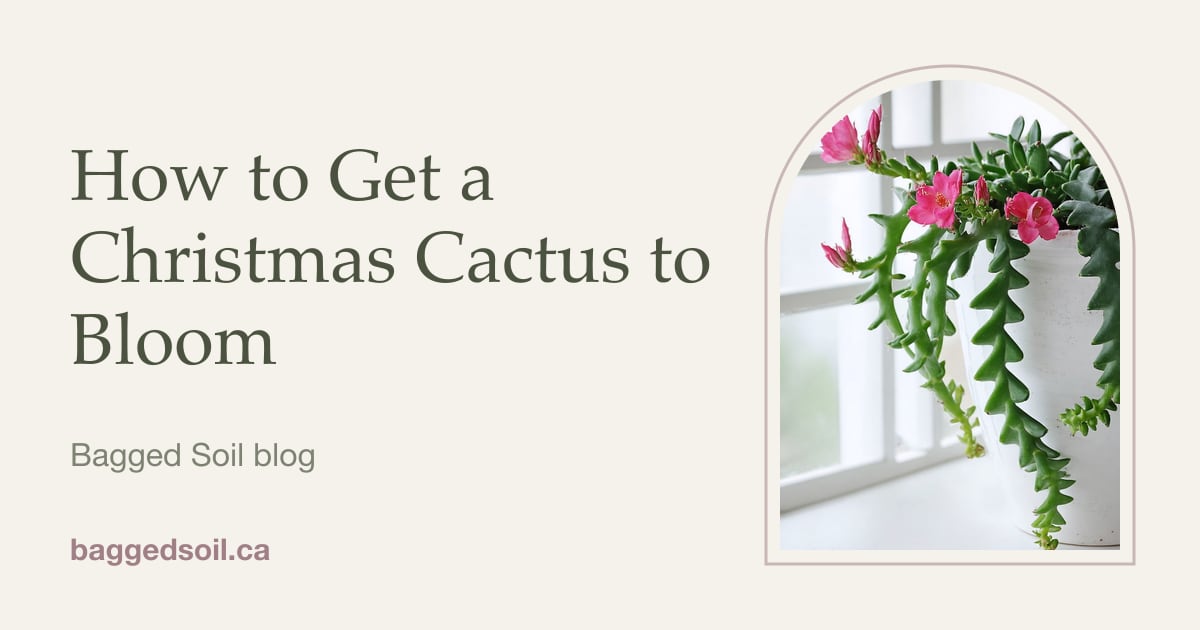
A Christmas cactus does well with bright indirect light, water only when the top few centimetres of soil are dry, and one steady spot while it sets buds. Most bud drop comes from moving the plant, drafts or uneven watering. It’s late October, so if yours is already budding, this is the time to leave it alone.
Where it comes from, and why that matters
Christmas cactus (Schlumbergera) is not a desert plant. In the wild it grows on tree branches in forests, tucked into bark and leaf litter. That’s why it likes more water than a typical cactus and why it hates sitting in wet, heavy soil. The roots want air.
It stores some water in its flat stems, but its roots want a loose, airy mix.
Light and temperature
Bright indirect light suits it best. An east window is ideal, and a bright spot a metre or so back from a south window also works. Direct summer sun can scorch the stem segments and turn them red or limp.
Aim for normal room temperatures of roughly 18 to 22°C during the day. Cooler nights help with budding. Keep it away from heating vents, radiators and cold glass, since both hot blasts and chills upset the plant.
How to get buds
Christmas cactus sets buds when nights get long and cool. The trigger is about six weeks of roughly 13 hours of darkness each day, with night temperatures around 10 to 15°C. Many plants do this on their own on a windowsill in autumn, as long as they don’t sit under a lamp that’s on until midnight.
If your plant never blooms, try this in late September or October:
- Put it in a room that’s dark from early evening to morning, or cover it with a box for the night.
- Keep it cool, but above 5°C.
- Water lightly while it sets buds.
- Bring it back to normal light in the morning.
After buds appear, stop covering it. Stable conditions matter more than anything else from then on.
Why Christmas cactus buds fall off
Bud drop is the most common complaint, and it nearly always traces back to a change in conditions. The usual causes:
- Moving or turning the pot. The plant sets buds facing the light. Turning it can make them drop. Mark the pot’s position and leave it.
- Drafts and temperature swings. Cold air from a door or window, or hot air from a vent.
- Watering extremes. Soil that dries out completely, or stays soggy.
- Too little light. Buds need energy to open, and a dim corner in winter may not supply it.
- Dry air. Heated Canadian homes can get very dry in winter. A tray of pebbles with water under the pot helps a little.
Losing a few buds is normal even on a healthy plant. If it drops most of them, look at what changed in the past week or two.
Watering
Water when the top 2 to 3 cm of soil feels dry, then soak the pot and let all the extra drain out. Empty the saucer afterwards. In winter, with short days and weak light, that’s often every 10 to 14 days, but it depends on your room and pot.
Soft, wrinkled stems usually mean the plant is thirsty. Limp stems with wet soil can mean root rot from too much water. If you’re not sure which one you have, our post on overwatering vs underwatering shows how to tell.
Use room-temperature water. Cold water straight from the tap is a shock to roots.
Feeding
Many growers give a diluted houseplant fertilizer in spring and summer while the plant grows, and stop in autumn so it can set buds. Follow the label on whatever fertilizer you choose. Our potting mixes contain no fertilizer, so it’s your call whether to add one.
Soil and repotting
A loose mix with good drainage keeps the roots healthy. Regular potting soil from a big bag tends to hold too much water for this plant, especially in a winter pot that dries slowly. Our Succulent & Cactus Mix is made from pumice, coco coir, perlite and charcoal, and works well here. If you’d like to go deeper on the soil itself, there’s a short guide on Christmas cactus soil.
Christmas cactus blooms best slightly root-bound, so don’t rush to a big pot. Repot every two to three years, and choose a pot only 2 to 3 cm wider than the current one. The best time is after flowering finishes, usually in late winter or spring. Always use a pot with drainage holes.
If you’re unsure whether your plant is ready, signs your plant needs repotting lists what to look for.
Winter care while it blooms
Once flowers open, they last longer in cooler rooms. Keep the plant bright, don’t move it, and water as soon as the top of the soil dries. For more on light, dry air and cold windows through the season, see our guide to winter houseplant care in Canada.
After flowering
When the last bloom fades, let the plant rest for a few weeks with a little less water. In spring, once new growth appears, return to regular watering and bright light. This is also the time to prune. Twist off a segment or two from long stems to encourage branching, and you can root those pieces in a small pot of moist mix for new plants.