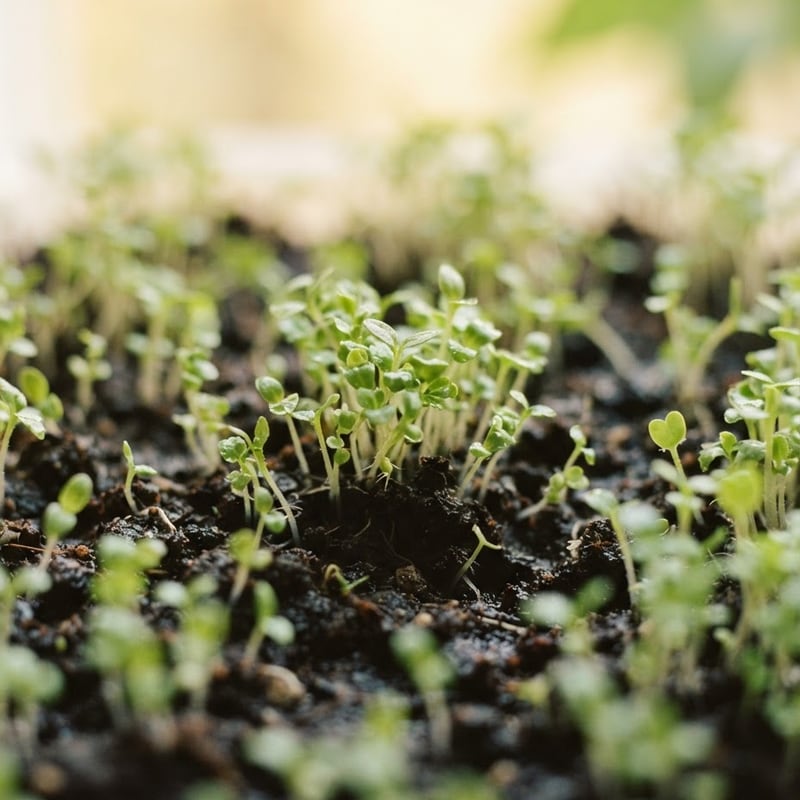
Seed starting mix is finer and lighter than potting soil, so seeds can push through it and the surface stays evenly moist without turning soggy. Ordinary potting soil can still work, particularly for big seeds, but a dedicated mix gives small seeds a more reliable start. Move seedlings into potting soil once they grow their first true leaves.
What the two are for
The difference comes down to what each is asked to do. Potting soil supports an established plant with roots that already reach and hold on. Seed starting mix helps a seed sprout and its first fragile root settle in.
A seed doesn’t need much from the medium at the beginning. It needs even moisture, air around the roots, and a surface loose enough for a tiny shoot to break through. A seedling’s root is thin and weak, and it can’t push through chunky or dense material.
What’s in each
Seed starting mix
Seed starting mixes are made from fine, light ingredients. Our Seed Starting Mix uses fine coco coir, vermiculite and fine perlite. Coir holds water evenly, vermiculite holds moisture and releases it slowly, and fine perlite opens the mix so air reaches the roots. A mix like this has no fertilizer, which is what you want at this stage.
Many commercial mixes are peat-based. Either way, the texture is soft and fine, with few bits larger than a pea.
Potting soil
Potting soil is a general-purpose blend for containers. It usually has coarser pieces of bark or compost, and some include added fertilizer or moisture-retaining crystals. It’s built to be a long-term home for plants that are already growing, so it often holds more water and packs down more than a seedling likes.
Not all potting soils are the same. Labels vary a lot. If you’re curious about how potting soil differs from potting mix, see potting soil vs potting mix.
Why seedlings do better in a fine mix
A few specific problems show up when small seeds go into heavy potting soil:
- Uneven moisture. Chunky pieces create dry pockets and wet pockets around the seed.
- Crusting. Dense soil can form a hard skin on the surface when it dries, which traps shoots underneath.
- Poor air. Soggy, compacted soil leaves roots short of oxygen.
- Damping off. This fungal disease makes seedlings collapse at the soil line. Wet, cold, stagnant conditions make it worse, and dense soil that stays soggy sets it up.
A light, fine mix reduces all four. It won’t fix poor watering, but it gives you more room for error.
When potting soil is fine
You don’t have to buy a separate bag every time. Potting soil works well enough when:
- The seeds are large. Beans, peas, sunflowers, squash, cucumbers and nasturtiums have enough strength to push through it.
- You’re direct-sowing in a bigger container. A deep pot of potting soil is more forgiving than a shallow tray.
- You sift it. Push potting soil through a coarse kitchen sieve and use the fine part to cover small seeds.
- You lighten it. Mix in some perlite or coir to improve drainage and airiness.
If you’ve used potting soil and your seeds came up, there’s no problem with that. It’s just less reliable with tiny seeds like lettuce, petunia, basil or snapdragon.
How to start seeds in a mix
- Wet the mix first. Dry peat or coir repels water. Add warm water, stir and wait until the mix feels like a wrung-out sponge.
- Fill clean trays or pots. Use containers with drainage holes. Press the mix down lightly. Don’t pack it.
- Sow at the depth on the packet. A common guideline is about twice the seed’s width. Very fine seeds are pressed onto the surface and left uncovered or barely covered.
- Cover to hold humidity. A clear lid or plastic wrap keeps the surface moist until sprouts show. Remove it once they emerge.
- Water from below. Set the tray in a shallow dish of water for ten to fifteen minutes. This avoids washing tiny seeds around.
- Give light right away. Once seedlings appear, they need bright light, ideally a grow light a few centimetres above the plants for 14 to 16 hours a day in Canada’s dim late-winter months.
Our guide on how to start seeds indoors covers timing and light in more detail. For frost dates, look up your local last-frost date, since it varies a lot across the country.
When to move seedlings on
The first leaves that appear are seed leaves, and they usually look different from the plant’s real leaves. When the first true leaves show, the seedling has used up its seed food. This is the time to pot it up into a roomier container with regular potting soil, or to start feeding with a diluted fertilizer if it stays in the seed mix. Handle seedlings by a leaf, not the stem, and bury them a little deeper, which helps tomatoes in particular.
Harden off outdoor plants over about a week before planting out.
Quick comparison
| Seed starting mix | Potting soil | |
|---|---|---|
| Texture | Fine and light | Coarser, heavier |
| Moisture | Even, drains well | Often holds more water |
| Fertilizer | None or very little | Sometimes added |
| Best for | Small seeds, early weeks | Established plants, big seeds |
| Risk | Seedlings run out of food after the first leaves | Crusting and damping off with fine seeds |