The clearest signs your plant needs repotting are roots circling the inside of the pot or poking out of the drainage holes, water that runs straight through without soaking in, and growth that has stalled in the growing season. One sign alone is a hint. Two or three together mean it is time.
The signs to look for
Roots at the drainage holes
Roots growing out of the bottom of the pot are the most obvious signal. A couple of thin roots are not an emergency. A thick mat of roots filling the holes, or roots lifting the plant up out of the pot, means there is no room left.
Slide the plant out and look. If you see more root than soil, and the roots wind in a tight circle around the edge, the plant is root-bound.
Water runs straight through
When a pot is full of roots, there is little soil left to hold water. You water, and it pours out of the bottom within seconds. The plant dries out between waterings far faster than it used to, and may wilt every few days.
A related problem is the opposite: water pools on top and takes a long time to sink in. That usually means the soil has compacted and shrunk, and it also calls for fresh mix.
Growth has stalled
A plant that put out new leaves all summer and then does nothing from spring to autumn is telling you something. Smaller new leaves, pale leaves, or leaves that grow and then yellow quickly can all point to a cramped root system.
Check the season first. Almost every houseplant slows down in winter, and that is normal. Stalled growth only counts if it happens when the plant should be growing.
The plant is top-heavy
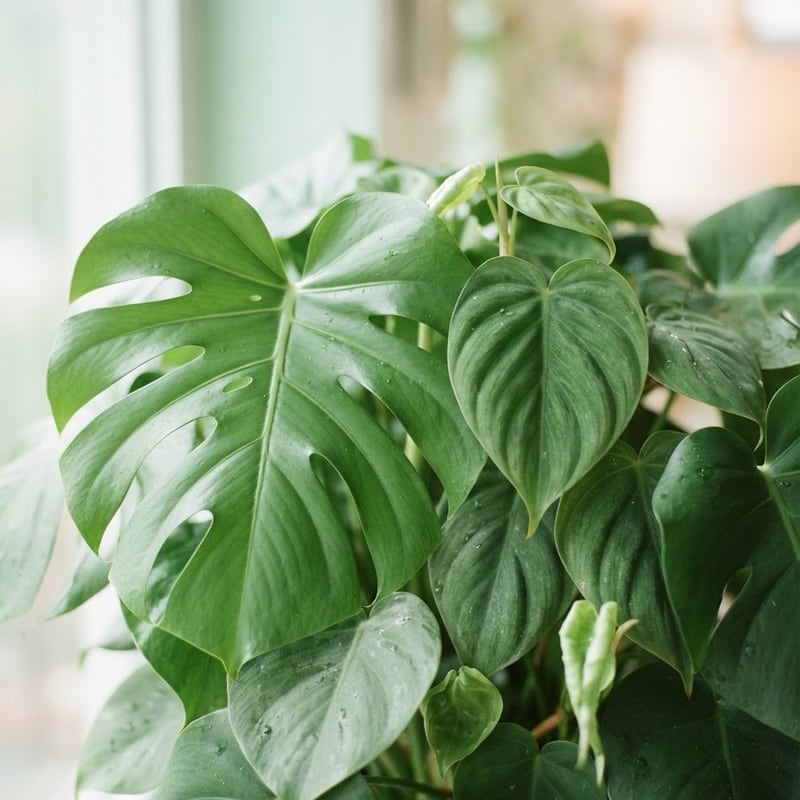
A tall plant in a small pot tips over easily. If your monstera falls over every time you move it, the pot may be too light and narrow for the size of the plant. A wider, heavier pot helps, along with a stake or moss pole.
The soil looks tired
Potting mix breaks down over time. Bark and other organic pieces decompose, and the mix becomes dense and muddy. Signs include:
- A crust or white mineral film on the surface
- Soil that pulls away from the edge of the pot
- A sour smell when you water
- Soil that stays wet for a week or more after watering
Plants in this kind of soil often struggle even when the pot size is fine. Fresh mix in the same size pot is a good fix. We cover the watering side of this in overwatering vs underwatering.
Salt build-up on the pot or soil
Tap water leaves minerals behind as it evaporates. Over a few years you may see a white or yellow crust on the soil or around the rim of a clay pot. Brown, crispy leaf tips can come from the same build-up. Fresh soil resets this.
Signs you should wait
Repotting is stressful for a plant, so do not do it just because a plant looks a little unhappy.
- It is winter. Plants rest in low light. Unless there is rot or a broken pot, wait for spring.
- The plant is in bloom or setting buds. Let it finish first.
- It was just repotted. Give it at least several months.
- The problem is something else. Yellow leaves can come from overwatering, low light or pests. Check those before you reach for a new pot.
- Some plants like to be snug. Snake plants, hoyas and many succulents flower and grow well when slightly root-bound.
The best time to repot
Spring and early summer are ideal for most houseplants, because they are about to put on growth and will fill in new soil quickly. Late summer works too in a pinch. Avoid late autumn and winter in Canada, when indoor light is weak and plants are barely growing.
How to repot, step by step
- Water the plant a day or two ahead.
- Choose a pot 2 to 5 cm wider than the current one, with drainage holes. Going much bigger keeps too much wet soil around the roots.
- Slide the plant out. If it sticks, run a knife around the edge or squeeze a flexible plastic pot.
- Loosen the root ball with your fingers. Tease out circling roots, and trim any that are brown, mushy or smell bad with clean scissors.
- Add a layer of fresh mix to the new pot. Set the plant at the same depth as before, with the base of the stems at the same level.
- Fill in around the sides and tap the pot gently. Do not press hard, because compacted mix defeats the purpose.
- Water until it runs out of the bottom, then empty the saucer.
Keep the plant out of direct sun for a week or so, and hold off on fertilizer for a few weeks. A little leaf droop right after repotting is normal.
Which mix to use
Match the mix to the plant, not just the pot. A monstera, philodendron or pothos wants a chunky, quick-draining blend, because their roots grow along trees in the wild and need air as well as moisture. Our Aroid Mix is made for these plants, with fir bark, coco chips, perlite, charcoal and a little peat. The monstera soil guide explains why in more detail.
Not every plant needs a specialty blend, though. A spider plant or peace lily is fine in a good all-purpose potting soil with a handful of perlite mixed in. If you are not sure what suits your plant, the guide to the best soil for indoor plants goes through the main groups.
Our mixes contain no fertilizer, so plan to fertilize on a regular schedule during the growing season, as you would with any plain potting mix.
A quick check before you buy a pot
Lift the plant out and look at the roots. White or light tan, firm roots with some soil clinging on are healthy. If there is soil all the way through with only a few roots, the plant does not need a bigger pot yet. Put it back and check again in a few months.
If you do repot, take the opportunity to propagate too. Overgrown pothos and similar vines can be trimmed into cuttings, and our guide on how to propagate pothos walks through it.