Bright, indirect light, no cold drafts, and water only when the top few centimetres of soil are dry: that’s most of poinsettia care. Ordinary potting mix is fine for it, so you don’t need to buy anything special or repot it while it’s in colour.
Choosing one at the store
Before you buy:
- Look for dark green leaves with no yellowing, and bracts that are fully coloured without damage.
- Check that the soil is slightly moist, not soaking wet or bone dry.
- Skip plants already dropping leaves on the shelf, which usually means they’ve been too cold or too dry.
- Wrap it in paper or a bag for the trip home. A few minutes in freezing air can damage the leaves.
Where to put it
Poinsettias want a bright spot with no blast of cold air. A window that gets several hours of light each day is ideal. An east-facing window often works well, while a north-facing one is usually too dim to keep the bracts bright. Strong sun straight through the glass can fade the bracts, so a sheer curtain helps.
Temperature matters a lot:
- Keep the room between about 15 and 21°C.
- Keep the plant away from cold windows, exterior doors, heating vents, radiators and fireplaces.
- Avoid moving it between rooms with very different temperatures.
Sudden temperature swings are a common reason a poinsettia drops leaves in its first week at home. Once it is settled in a spot with steady light and temperature, leave it there for the rest of the season.
Watering
Check the soil with a finger. When the top 2 to 3 cm feels dry, water slowly until it runs out of the drainage holes, then empty the saucer.
The decorative foil or plastic sleeve is the biggest trap. It holds water at the bottom of the pot, and the roots rot. Either poke drainage holes in the sleeve and set the pot on a saucer, or lift the pot out to water it and let it drain in the sink.
Check the soil again every few days, since a pot in a warm room dries faster than one in a cool room, and lifting the pot helps too: a dry pot feels much lighter than a wet one.
Underwatering causes limp, drooping leaves. Overwatering causes yellowing leaves and a heavy, wet pot. Our post on overwatering vs underwatering shows how to read each one. If the stem base goes soft, see the guide to root rot.
Humidity
Heated homes in a Canadian winter are dry. If the leaf edges look crispy, group the plant with others or set it on a tray of pebbles with a little water, keeping the pot above the water line. Misting does little.
Fertilizing
A poinsettia in colour over the holidays doesn’t need fertilizer. If you keep the plant into spring, start a diluted houseplant fertilizer around March, about once a month.
Soil and repotting
Fresh potting mix is all this plant needs. Most poinsettias are sold in a peat-based mix, which is fine. Skip repotting while the plant is in colour, since disturbing the roots can cause more leaf drop.
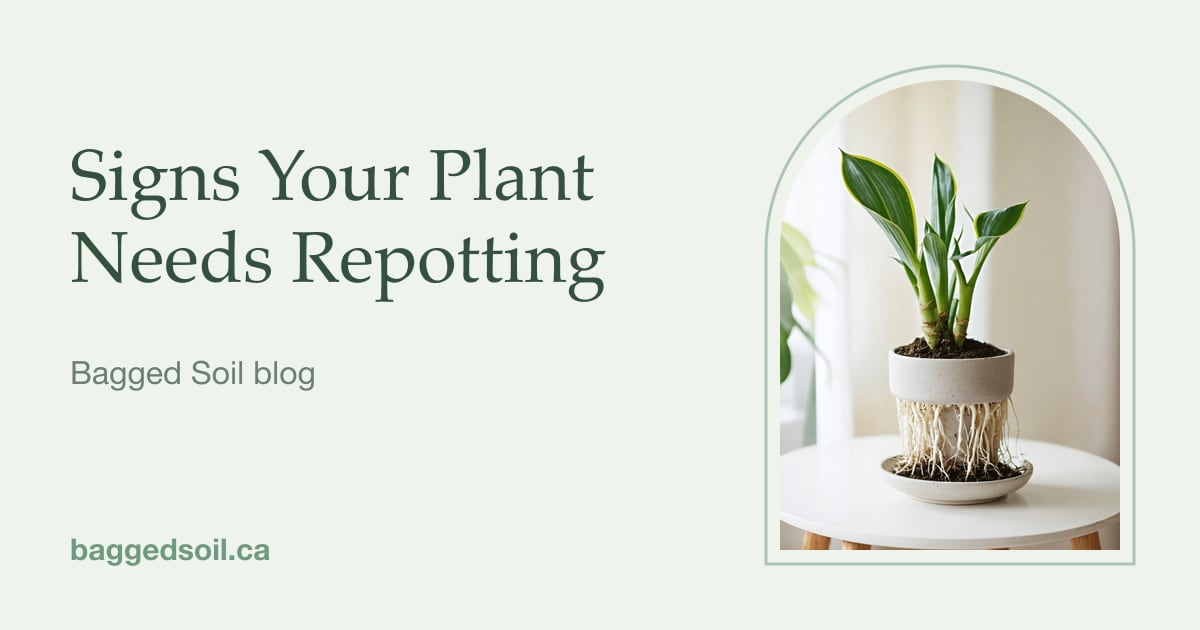
If you keep the plant into spring and the roots fill the pot, move it up one size with fresh mix. What matters is a loose, free-draining mix. Our Aroid Mix would work if you have a bag on hand, but regular houseplant potting mix does the job. See potting soil vs potting mix if the labels confuse you, and signs your plant needs repotting for when to do it.
After the holidays
The coloured “petals” are bracts, which are leaves that changed colour. They usually look good for a couple of months. When they fade and drop, the plant has finished its display but is still alive.
You have two options:
- Enjoy it and let it go. Many people treat poinsettias as seasonal decor and compost them when they’re done.
- Keep it as a green houseplant. In spring, cut the stems back by about half, put the plant in a bright spot, water when the soil is dry, and start fertilizing lightly.
Getting it to colour again
This part is hard. Poinsettias colour up in response to long nights. To be coloured by December, they need around 14 hours of complete darkness each day for several weeks, starting in late September or October. Even a lamp switched on in the evening can interrupt the cycle.
Some people cover the plant with a box each evening and uncover it in the morning. It works, but it’s a daily chore, and many people skip it and buy a new plant each year.
Common problems
Dropping leaves
Cold drafts, soggy roots, or letting the plant dry out completely. Look at the location and the soil.
Yellow leaves
Usually too much water. Check the drainage and remove any foil sleeve.
Sticky sap
Cut or bruised stems and leaves leak a milky sap. Wipe it up with a damp cloth.
White cottony bits or webbing
Look under the leaves for pests. Our posts on mealybugs and spider mites cover the common ones.
Quick checklist
- Bright, indirect light.
- 15 to 21°C, no drafts.
- Water when the top 2 to 3 cm is dry, and never let it stand in water.
- Ordinary potting mix is fine.
- No fertilizer while it’s in colour.
For more seasonal advice, see winter houseplant care in Canada.